
What Is The Best Glue For 3D Printing and Why Does It Matter?
Key Features
- High bonding strength that works across multiple 3D printing materials (PLA, ABS, PETG, resin).
- Heat-resistant and durable for handling mechanical stress and elevated print bed temperatures.
- Easy application and clean removal without damaging the printed surface.
- Cost-effective and widely available, suitable for both hobbyists and industrial users.
Have you ever finished a 3D print only to see it detach mid-way, warp at the corners, or separate at layer bonds? Adhesion remains one of the biggest challenges in 3D printing, especially when transitioning from hobby-grade PLA to engineering plastics like ABS and Nylon. This is where the choice of glue for 3D printing becomes critical—not just as a bed adhesive but also for post-print bonding of parts.
According to Wohlers Report 2024, the global 3D printing market has surpassed $21 billion, with consumer desktop printers accounting for nearly 37% of shipments. Yet, over 62% of users report bed adhesion issues during the first year of usage, often leading to wasted filament and failed prints. A reliable adhesive solution is not just a convenience, it’s a productivity multiplier.
Quick Answer
The best glue for 3D printing provides strong adhesion to the print bed, prevents warping, and ensures clean part removal. Popular options include PVA glue sticks, specialized 3D printing adhesives, and cyanoacrylate for post-processing.
Beyond convenience, using the right glue is a cost saver. A failed ABS print can waste up to $10 in filament and 5–8 hours of machine time. With the right adhesive, that risk drops significantly. Industry studies highlight that glue-based adhesion can reduce print failure rates by 35–50%, depending on the material. This makes glue not just a workaround but a strategic tool in 3D printing.
Why Is Glue Important in 3D Printing?
Glue in 3D printing primarily addresses adhesion and warping. Without adhesive support, thermoplastics often shrink while cooling, leading to edge lift or complete detachment. Glue provides a controlled surface interaction, creating just enough grip for the part to hold during printing and easy release once cooled.
A study from 3D Printing Industry (2023) found that users applying adhesives had a 40% higher first-layer success rate compared to those relying on bare build surfaces. This improvement translates into reduced filament waste and faster prototyping.
Which Glues Work Best for Different 3D Printing Materials?
Not all adhesives behave the same across filaments. Below is a material–adhesive compatibility matrix:
| Material | Recommended Glue | Why It Works | Notes |
| PLA | PVA glue stick (Elmer’s, UHU), hairspray | Creates mild tack, prevents lift | Easy cleanup, ideal for beginners |
| ABS | ABS slurry (ABS dissolved in acetone), specialized 3D glues (Magigoo) | Strong chemical bond prevents warping | Needs ventilation due to acetone fumes |
| PETG | PVA glue stick, Magigoo, Dimafix | Prevents excessive sticking to glass beds | Avoids glass chipping on removal |
| Nylon | Pritt stick, PA-specific adhesives | Compensates for high shrinkage | Sometimes combined with Garolite build plates |
| Resin (SLA/DLP) | Cyanoacrylate (super glue), epoxy resin adhesives | Works for post-processing part bonding | Not for bed adhesion—resin prints stick via platform settings |
What Are the Types of Glues for 3D Printing?
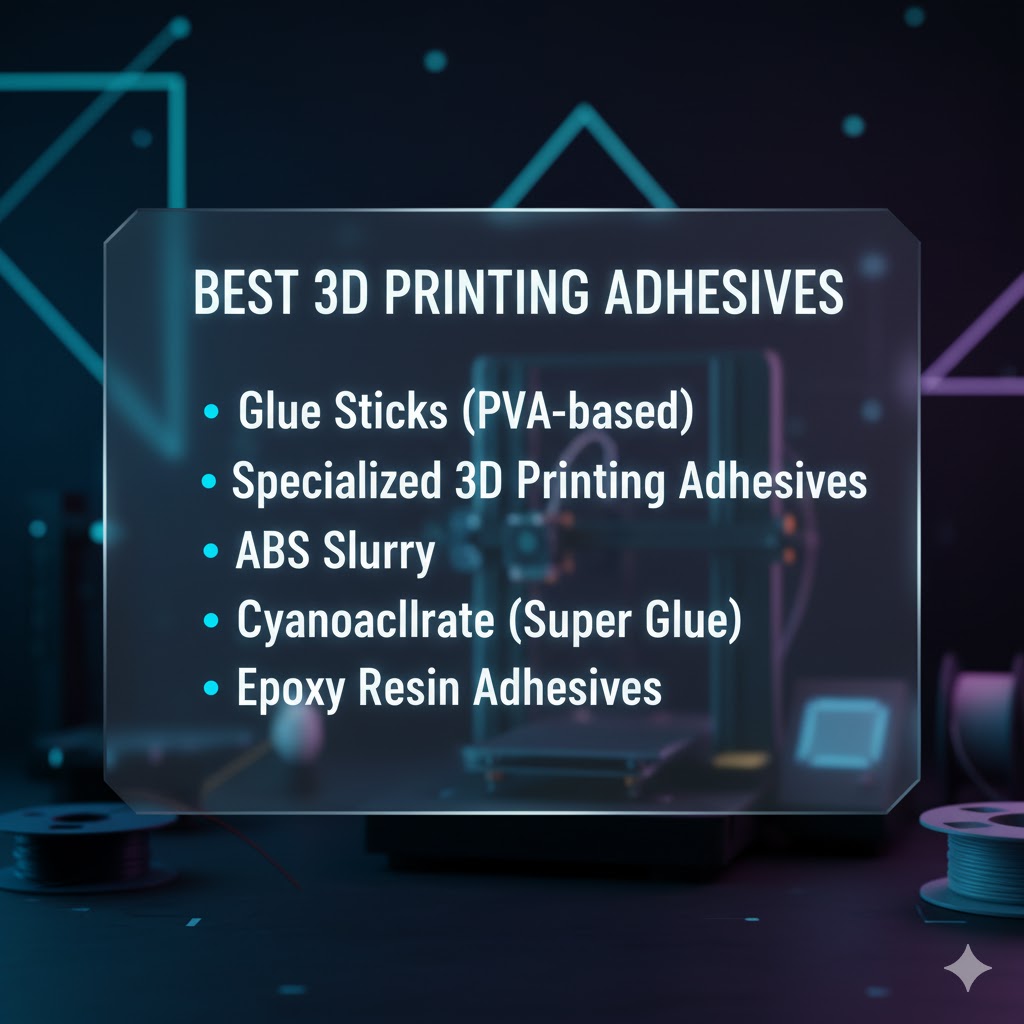
Glue Sticks (PVA-based)
Affordable, widely available, and effective for PLA, PETG, and ABS. They provide just the right tack and wash off easily with water.
Specialized 3D Printing Adhesives
Brands like Magigoo, Dimafix, and Layerneer create adhesives designed for high-temperature environments. These products often change adhesion strength with heat, strong grip while hot, easy release when cool.
ABS Slurry
Made by dissolving ABS filament in acetone, this DIY solution creates a strong chemical bond for ABS prints. While effective, it requires good ventilation and careful handling due to fumes.
Cyanoacrylate (Super Glue)
Best for post-processing—bonding broken parts or joining multi-part assemblies. Known for fast curing and high tensile strength.
Epoxy Resin Adhesives
Two-part epoxies are useful when strength is critical. They create durable bonds between resin prints or when attaching printed components to non-printed parts.
When Should You Use Glue in 3D Printing?
Glue is not always necessary for every print, but it becomes an essential tool in specific scenarios where adhesion, stability, and print quality are at risk. Understanding when to apply glue can save both time and filament, while ensuring more consistent results.
During First-Layer Printing
The first layer is the foundation of the entire print. If it doesn’t stick well, the print will likely fail. This is especially critical when working with high-shrinkage materials like ABS, Nylon, and Polycarbonate. These plastics cool and contract quickly, creating tension that causes edges to lift or curl. A thin glue layer helps the print lock into place, ensuring the first layer sets correctly and resists warping.
For Large or Flat-Bottomed Parts
When printing wide or flat models, the chances of warping increase because the large surface area cools unevenly. Adhesives distribute adhesion across the bed, preventing corner lifting and ensuring even bonding across the entire print base. Without glue, these prints often peel away mid-process, wasting hours of work.
For Multi-Part Assembly and Repairs
Glue is also used after printing for assembling models printed in sections. For instance, large cosplay helmets, architectural models, or engineering prototypes are often split into smaller pieces and then bonded using cyanoacrylate (super glue) or epoxy. Additionally, glue helps repair cracks, fill gaps, or strengthen weak joints in printed objects, extending their usability.
For Protecting Build Surfaces
Some materials, especially PETG, stick so aggressively to bare glass or PEI-coated beds that they can chip or damage the build surface during removal. Applying a thin glue barrier creates a protective film. This allows strong adhesion during printing but easy release once the bed cools—saving both the print and the build plate from damage.
When Printing in High-Humidity or Uneven Environments
Environmental conditions also affect print success. In humid or drafty rooms, adhesion problems become more frequent. Glue helps stabilize the first layer under these conditions, making it an extra safeguard when printing in less controlled environments.
Which Glue Products Are Leading the Market?
Competitor analysis shows that Magigoo dominates professional users, while hobbyists lean towards Elmer’s/Pritt glue sticks.
- Magigoo: Specialized formula, works across materials, heat-activated release.
- Dimafix: Spray adhesive optimized for ABS, long-lasting but requires ventilation.
- Elmer’s/Pritt/UHU Glue Sticks: Affordable, effective for PLA/PETG, non-toxic.
- Loctite Super Glue (401/406 series): Industrial-grade post-print bonding solution.
How to Apply Glue for Maximum Effectiveness?
The effectiveness of glue in 3D printing is not only about what you use but also how you apply it.
Step 1: Clean the Build Surface
Before any adhesive is applied, the build plate must be cleaned with isopropyl alcohol (IPA, 70–99%) to remove dust, grease, and filament residue. A clean surface ensures consistent bonding.
Step 2: Apply a Thin, Even Layer
For PVA glue sticks, apply a thin coat in overlapping strokes across the print area. Avoid heavy buildup, as excess glue can cause leveling inconsistencies. For liquid adhesives (like Magigoo or Dimafix), shake well and spread a light film across the plate.
Step 3: Refresh Between Prints
Adhesive strength diminishes after 2–4 prints. Reapply glue as needed, and clean the surface before recoating. ABS slurry should be stirred before every use and applied evenly with a brush.
Step 4: Clean Up After Use
Water-soluble PVA glue can be rinsed off with warm water, while specialized adhesives typically wipe away with IPA. Always remove old glue before reapplying to avoid uneven adhesion.
By maintaining this cycle of prep → apply → refresh → clean, you maximize the efficiency of glue and extend the life of your build surface.
Are There Alternatives to Glue?
While glue is the most widely used solution, several alternatives exist for those seeking advanced adhesion methods.
PEI Sheets
PEI (Polyetherimide) sheets offer reliable adhesion for PLA, ABS, and PETG. They are reusable and durable, though more expensive than simple glue sticks.
BuildTak and Wham Bam Sheets
These textured surfaces grip prints mechanically. They are effective but may require replacement after extended use.
Garolite Build Surfaces
Garolite (G10/FR4) is especially effective for Nylon, providing strong adhesion without additional glue. However, its material compatibility is limited.
Heated Beds
Heated build plates reduce warping by keeping the first few layers warm and stable. While effective with PLA and PETG, high-shrinkage filaments like ABS still benefit from glue combined with heat.
Industrial Adhesion Methods
Vacuum beds and proprietary coatings exist in professional settings, providing premium adhesion but at significantly higher costs.
Despite these alternatives, glue remains the most adaptable and budget-friendly solution, making it the default choice for most users.
Final Thoughts: Which Glue Should You Choose?
The best glue for 3D printing depends on your material and use case:
- Beginners printing PLA → PVA glue sticks.
- ABS/Nylon users → Magigoo or ABS slurry.
- Resin printers → Super glue or epoxy for assembly.
With adhesive options improving, failure rates are dropping, making 3D printing more reliable. The global adhesive segment in 3D printing consumables is expected to grow at 11.2% CAGR (2024–2030), underscoring its rising importance in both hobbyist and industrial applications.

Hi, I’m Mark Stevens. I love exploring 3D printing and diving deep into slicer software. I spend my time testing slicer settings, comparing features, and sharing tips to help creators get smoother, faster, and more reliable prints. My goal is to make slicer tools easy to understand and use, whether you’re a beginner or a seasoned 3D-printing enthusiast.


